
Filler words in English: hesitating isn't the problem, hesitating in Spanish is
Native speakers hesitate all the time. What gives you away is your Spanish "eh" and pausing mid-sentence. How to switch fillers and where to put the pause.
- conversation
- fluency
- pronunciation

Someone asks you a question in an English meeting, you reach for the word, and out comes a long "eeeh…". Then you spend the afternoon thinking you need to get rid of that sound. It's the standard advice: "don't use filler words." And it's bad advice.
Hesitating isn't the problem. Native speakers hesitate constantly: in a classic corpus of British conversation, the typical speaker produces 17.3 fillers per 1,000 words. What gives you away is two things: you hesitate with Spanish sounds (eh, este, o sea), and you hesitate in the middle of the sentence, between the subject and the verb. The fix isn't to go quiet. It's to hesitate in English (uh, um, well, I mean) and move the pause to the edge of the phrase.
Native speakers hesitate all the time, and the exam knows it
In English, uh and um are part of the language. Herbert H. Clark and Jean E. Fox Tree analyzed 170,000 words of recorded conversation and put it plainly in Cognition: "uh and um are conventional English words, and speakers plan for, formulate, and produce them just as they would any word." Across their 65 speakers, the rate ran from 1.2 to 88.5 fillers per 1,000 words. Nobody talks without them.
Official exams expect you to hesitate too. The public IELTS band descriptors don't demand zero hesitation, not even for the top score. At band 9, "any hesitation that occurs is used only to prepare the content of the next utterance and not to find words or grammar." What gets scored isn't whether you hesitate. It's why.
Hesitation also helps the listener. In an experiment at the University of Edinburgh, words that came after an er were more likely to be remembered in a later memory test. Daniel Erker and Joanna Bruso sum it up in their 2017 study: "Instead of representing clumsy interruptions," filled pauses "actually facilitate both the production and perception of speech."
Your eh has a Spanish accent
Every language has its own fillers, and yours sound Spanish. According to Erker and Bruso, "while [ə] and [əm] are favored FPs of English speakers, Spanish speakers frequently fill pauses with [e] or [em]." Your eh is a tight, tense e. The English uh is a schwa: the relaxed, neutral vowel in the or at the end of sofa.

Advanced learners do it too. Linguist Jasone Cenoz recorded five advanced English Philology students at the University of the Basque Country telling a picture story in English. In 2,400 words there were 857 pauses. When the pause was voiced, it was eh 84% of the time. The English um showed up exactly once.
An imported filler marks you as a learner faster than a grammar slip. Clark and Fox Tree noticed it firsthand: "Speakers of English as a second language often import the fillers from their first language – we have heard examples from native French, Hebrew, Turkish, and Spanish speakers – and that is one reason they continue to be heard as non-native speakers." In their table of fillers by language, Spanish gets eh, em, este and pues. Your grammar can be flawless and one este… will out you in half a second.
A filler can be learned like any other sound. In the mirror case, learners of Spanish whose first language was English, French or Russian, María J. Machuca found that advanced learners produced the correct Spanish filler more often than intermediate ones. And among Spanish speakers in Boston with the most contact with English, Erker and Bruso found their Spanish pauses shifting away from e toward more central vowels, like the English one.
Where you hesitate matters more than you think
Listeners judge your fluency by where the pause falls. Jimin Kahng had listeners rate the fluency of second-language English speakers, and the strongest predictor was the rate of silent pauses inside the clause. In a second experiment, Kahng edited the audio to move the pauses around: same words, different perceived fluency, for native and non-native speakers alike.
Spanish-speaking learners tend to hesitate in exactly the worst spot. In Cenoz's study, 57% of filled pauses fell inside the clause, and the most common gap was between subject and verb: "The frog… eh… eh… goes out of the vase." Her conclusion: "most filled pauses are located within clauses. This location is the most likely to correspond to difficulties of the speech task and to affect the speaker's fluency." The IELTS describes the same thing at band 7: hesitation that occurs "often mid-sentence" and points to "problems with accessing appropriate language."
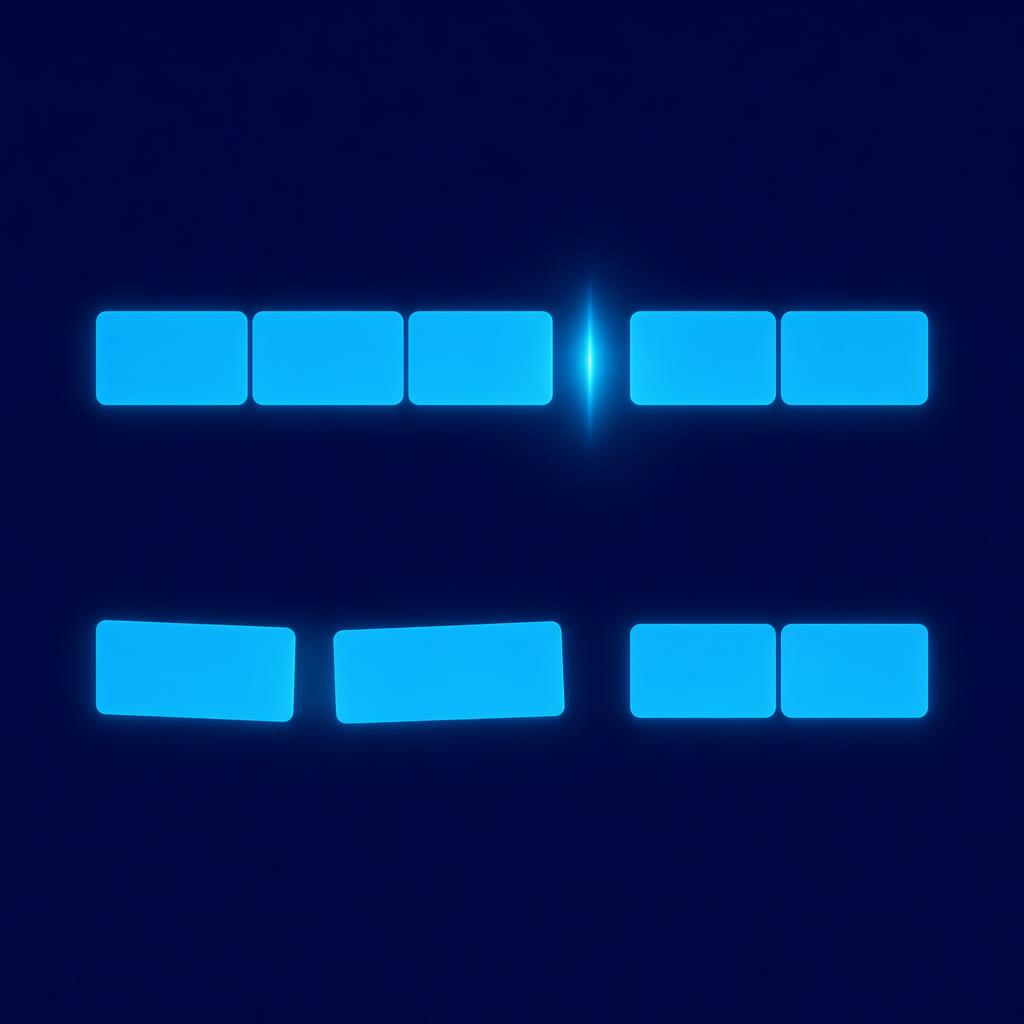
The working rule is simple: hesitate before the chunk, not inside it. "Well… the frog goes out of the vase" sounds like someone thinking. "The frog… eh… goes out" sounds like someone hunting for the verb.
A short kit of English hesitations
The best candidates in Trinity College London's speaking exams don't hesitate less. They hesitate better. Working from a corpus of its exams analyzed with Lancaster University, Trinity found that "one thing that test takers who perform better do is use a variety of ways to manage hesitation," and it recommends fillers like well and right instead of always saying erm and er.
Swap each Spanish filler for its functional English match:
- «Pues…» when you start an answer → Well… The most useful one for buying two seconds before you reply.
- «O sea…» to rephrase → I mean… (Not often… I mean… he's only asked a couple of times).
- «A ver…» when you need to think → Let me think… or Let's see…
- «¿Cómo se llama?» when you're hunting for a name → Hold on, it's…
- «Este…» or «eeeh» for short pauses → uh or um, with a schwa. British English writes er and erm, but doesn't pronounce the r.
If you can't decide between uh and um, go with um: its use is rising relative to uh in both American and British English, a change led by women and more educated speakers.
When this advice isn't enough
Switching fillers won't help if you hesitate every three words. Trinity's notes warn about it: hesitating is natural, but with too many erms and ers "the conversation becomes difficult to understand and uncomfortable to listen to." In a prepared presentation, you don't need fillers at all. You need silent pauses between ideas.
If your pauses land between subject and verb because you can't find the verb, the problem is word access, and a better filler only covers it up. Could you say "I've been meaning to ask you" right now, out loud, without a single eh? That automaticity is what Tabla trains: you say short phrases out loud against a time limit and work through long phrases piece by piece, until you no longer need the pause in the middle of the sentence.
The goal isn't to speak without hesitating. It's for your hesitations to sound like someone thinking in English.
Try this today: record one minute answering "What did you do last weekend?", count your ehs and mark which ones fell between subject and verb; then record it again, starting each sentence with Well… or um instead of stalling mid-sentence.