
Your First Place in the UK: The Household English No Course Teaches
Hob, immersion, bins: the household words that decide your first 48 hours in a British home, and why your English course saved them for last.
- vocabulary
- travel
- real life

You reach the Manchester flat at eleven at night and your host has left a note on the kitchen counter: "The hob's a bit temperamental, the immersion is on a timer, and the bins go out Tuesday." You recognize every grammatical structure in that sentence. You recognize none of the three words that decide whether you eat a hot dinner, shower in warm water, or get an earful from the neighbor. You're not an edge case: the UK statistics office counted 93,823,780 guest nights in short-term lets in a single year.
What breaks your first stay in a British home is not advanced English. It's about twenty household words your course pushed to the back of the queue. Oxford Learner's Dictionaries puts hob, the cooktop, at C2 in its vocabulary lists and boiler, the furnace, at C1, while cooker sits at A2. Objects that sit in every house in the country, filed as near-native English. Here's that short list, scene by scene, with the exact phrase for asking when something won't work.
Your course didn't fail you. It sequenced the vocabulary wrong.
Household vocabulary arrives late because frequency lists were built on written text. Paul Nation named the mechanism with an uncomfortable example: "Words like hullo, goodbye, pal, and damn, which are very common in spoken language, occur in the fourth 1,000 word-families because spoken language makes up only 10% of the BNC." The same review establishes that unassisted comprehension of everyday conversation takes 6,000 to 7,000 word families, far past what a general course covers.
The choice of corpus decides your textbook. Jeanne McCarten, a lexicographer at Cambridge University Press, puts it plainly: "So our choice of corpus may affect which words we will include in our materials and which meanings of those words we will teach." Cambridge's own reference material on spoken vocabulary draws on the North American corpus, and American English is the dominant variety outside the UK according to a PLOS ONE study of geolocated tweets and digitized books. Your English was aimed at the wrong island long before you booked the flight.
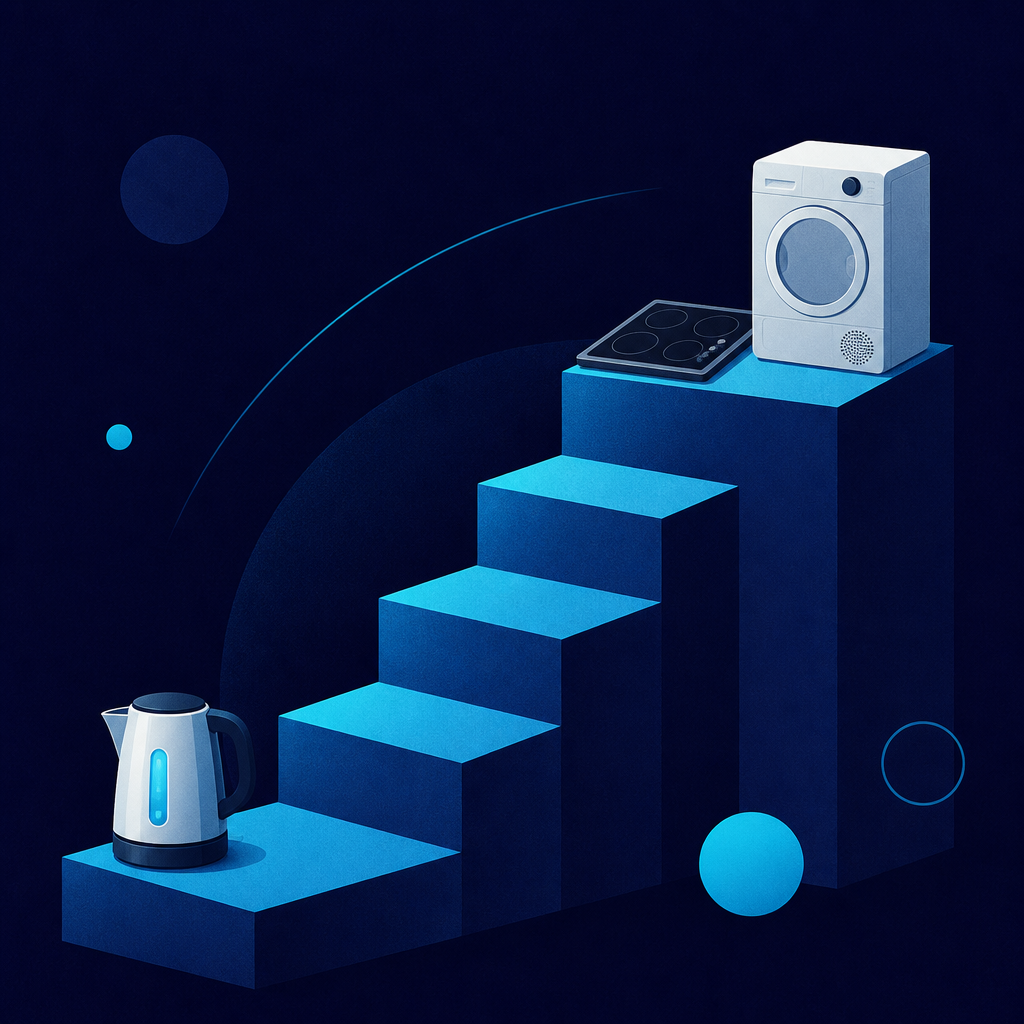
Shows and movies don't close the gap, because the gap is domestic and British. Five thousand word families buy you 98% coverage of English-language film and television, and still nobody on screen switches on an immersion. The British Council's own guide to the differences between the two varieties spends all five of its sections on grammar and pronunciation. Household vocabulary gets one clause.
The fix isn't more study. It's a different order. Paul Nation and David Crabbe showed back in 1991 that a survival syllabus of roughly 120 items, a quarter the size of the Council of Europe's Waystage level, crosses the real-communication threshold faster than a general course: "A quick survey of introductory course books indicates that their syllabus content provides poor short term return for someone with limited time to invest." One telling detail: their accommodation section assumes a hotel and contains not a single household word.
The kitchen: hob, cooker, and the ritual of the kettle
The hob is the cooktop and the cooker is the stove-and-oven unit. Oxford defines hob as "the top part of a cooker where food is cooked in pans" and marks the word British, against the American stovetop. If the burners won't light, your line is "Sorry, how do I turn the hob on?"
Three more kitchen details will save you half an hour of pointing. British outlets carry their own switches, so a plugged-in appliance can still be dead: the phrase is "switch it on at the wall." The electric kettle runs the social life of the house, so "I'll put the kettle on" means someone has just offered you tea. And what you'd call doing the dishes is the washing-up here, with its washing-up liquid sitting by the sink.
No hot water: boiler, immersion, airing cupboard
Hot water reaches you by one of two routes in a British home, and it pays to know which one you got. Citizens Advice describes the first in a single line: "A combi boiler heats up tap water when you turn the hot tap on." The second is a tank you have to heat first, and the agency describes it with a precision you'll appreciate while standing in front of a cupboard: "An immersion heater uses electricity to heat your water. It looks like a round plastic cap coming out of the cylinder with an electrical cable attached to it." That cupboard is called the airing cupboard, usually in the hallway.
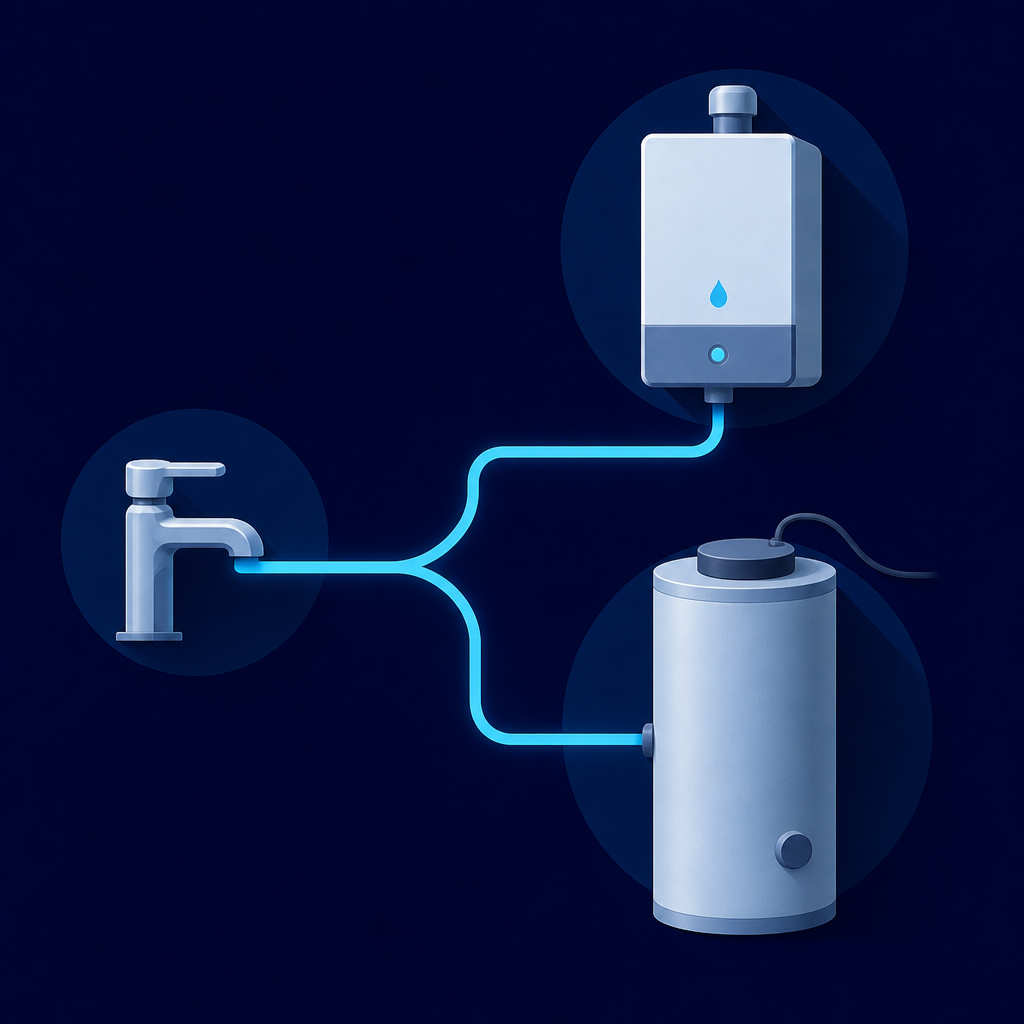
The meter deserves thirty seconds of attention before you unpack. If the flat has a prepayment meter, you top up the energy in advance, and Ofgem flags the part that catches everyone out: "If you have a prepayment meter you will still pay standing charges." The fixed daily charge accrues even if you spend the whole weekend away.
Could you say "Sorry, there's no hot water. Is the immersion on a timer?" out loud right now, without assembling it word by word? That automaticity under pressure is exactly what Tabla trains: whole phrases said against the clock until they come out on their own.
The ground floor and bin day
Ground floor means the floor at street level, and Spanish speakers get this one free: planta baja maps straight onto it. Oxford marks ground floor as British English and first floor as its American equivalent. The British first floor is one flight up. If your English comes from American shows, this is the mistake that leaves you knocking on the wrong door with a suitcase in hand.
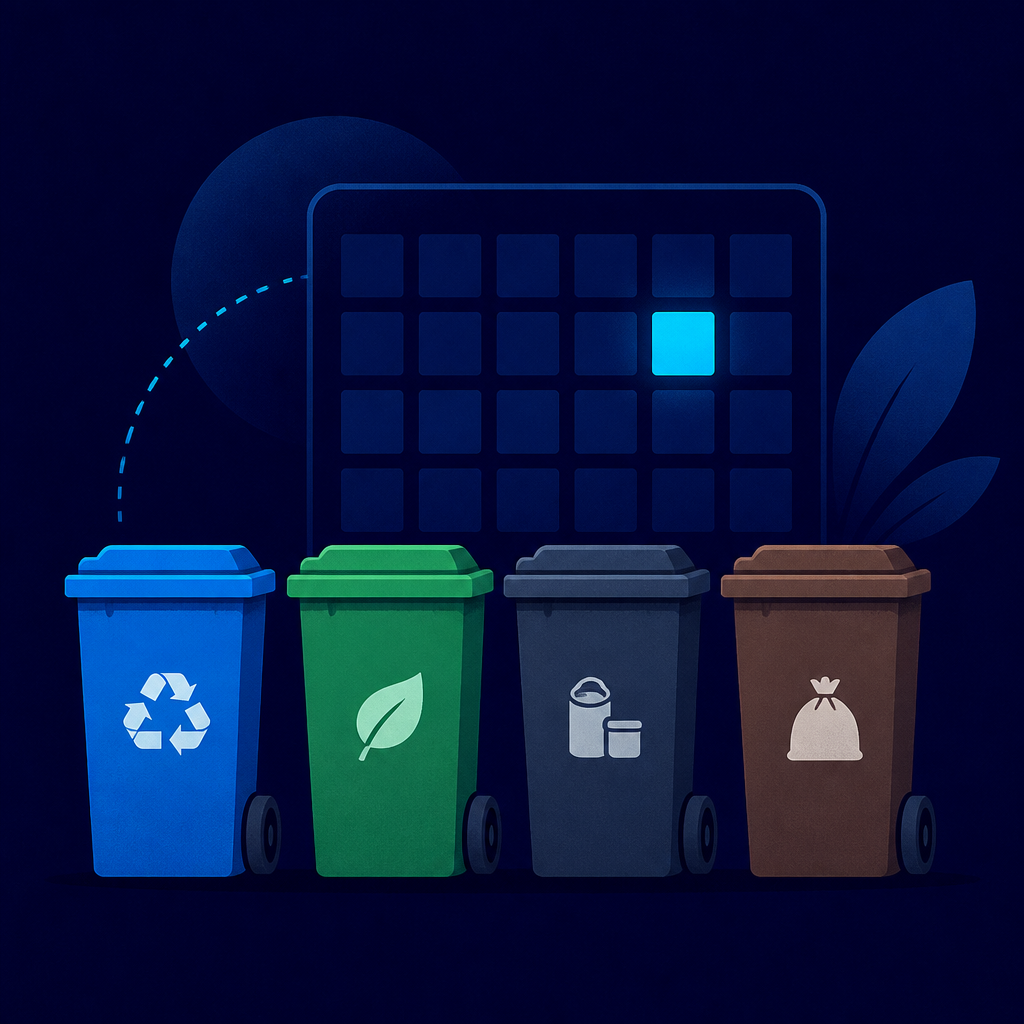
Bin rules are the second trap, and they got stricter this year. The UK government's Simpler Recycling policy requires English households to separate four waste streams, with weekly food waste collection for most homes from March 31, 2026. That's why your host leaves instructions about which bin goes out and on what day. Two questions settle it: "Which bin does this go in?" and "When do the bins go out?"
Four more words will surface before the week is over: hoover (to vacuum), tumble dryer (the clothes dryer, which plenty of rentals don't have), duvet (the comforter), and the loo (the bathroom). Oxford lists tumble dryer at C2 and hoover at C1, which says more about frequency lists than it does about the words.
Twenty words and four rescue phrases cover your first 48 hours better than another month of grammar. Learn them on the plane, out loud, and walk into the flat already knowing how to ask.
It's eleven at night, you turn the hot tap and the water runs cold. Your host wrote: "the immersion is in the airing cupboard." What do you do, and what do you write back?
Find the hallway cupboard, usually next to the bathroom or a bedroom: inside is a cylindrical tank with a round plastic cap and a cable. That's the immersion heater, and its switch is on the cupboard wall, not on the tank itself. Flip it on and give it time, because it heats a whole tank rather than the water at the tap. If you can't find it, write "Hi! I can't find the immersion switch — could you tell me where it is?"
Try this today: say "Sorry, how do I turn the hob on?" and "When do the bins go out?" out loud three times against a stopwatch. By the third round both should land in under two seconds, with no mental translation.